Agents Need Your Data. Who Moves It? Notes From Builder Nights Seoul
AI agents are the hottest thing in tech right now. They book things, answer things and get work done for you. But an agent can only help you if it knows about you, and what it knows is your data. So who moves that data, and who decides?
That question ran through Builder Nights Seoul, which we co-hosted with MetaMask, LF Decentralized Trust and Ticker Capital. The room brought together a standards body, a law professor, a digital identity company and the team behind MetaMask.
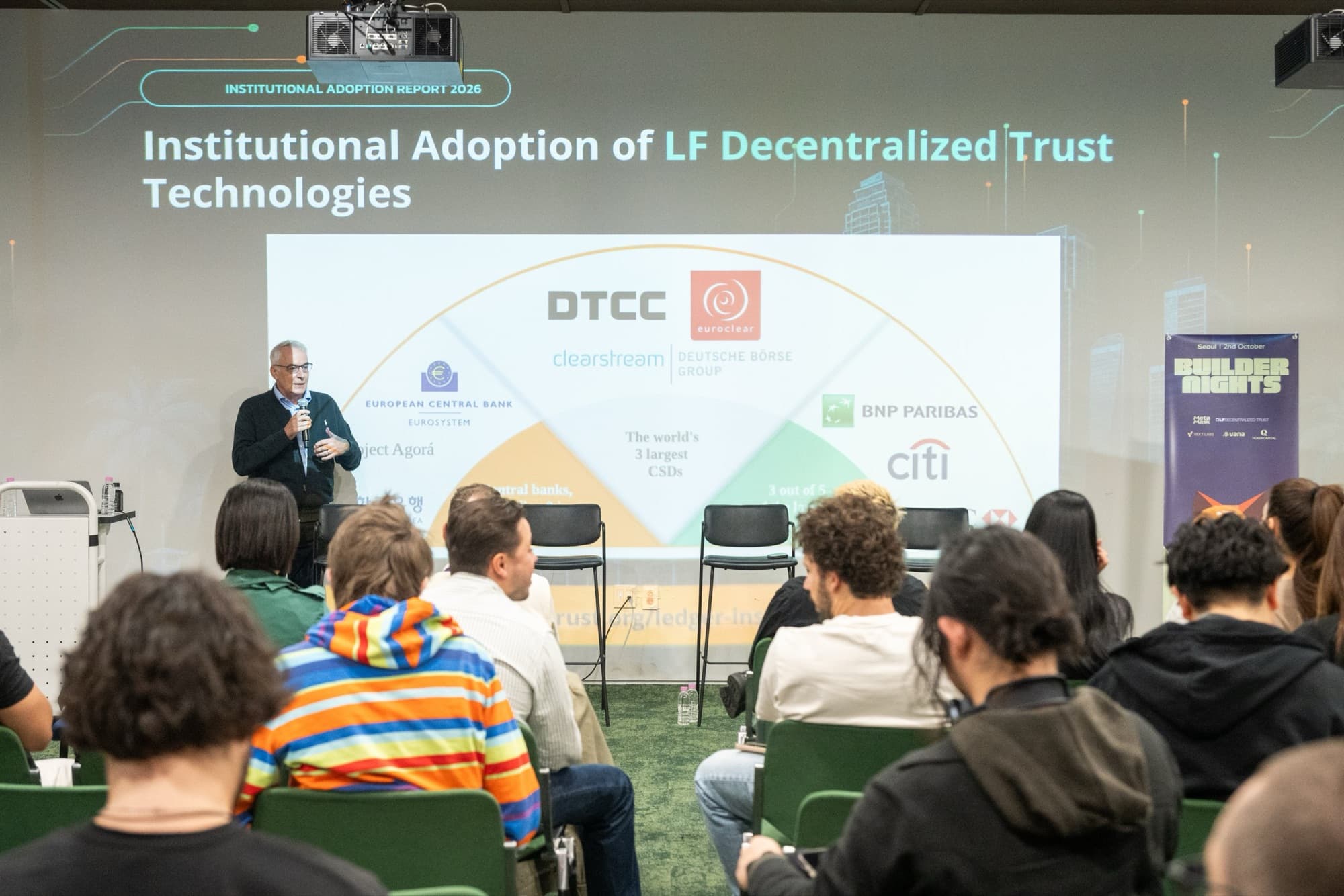
Julian Gordon of LF Decentralized Trust opened the night on how decentralized technology can support digital infrastructure, and on who is already part of that work. LF Decentralized Trust is the Linux Foundation's home for decentralized technology. Its members include ten central banks, and the Bank of Korea became the tenth in November 2025.[1] It is also the foundation that hosts the standard Vana wrote for how personal data moves.
Panel one: agents, and what comes after them

Art Abal of Vana Foundation led the first panel, with Yesha Yadav of Vanderbilt, and Francesco Andreoli and Zhen Yu Tong of MetaMask.
MetaMask is already building for agents. In June it launched Agent Wallet, which lets AI agents trade for you within spending limits and rules you set, while you keep control of your funds.[2]
Trading is only the start. The next wave is agents that do everyday things for you, and those agents need to know about you. An agent that cannot see your calendar, your bank history or your health records is guessing. To be useful, it needs your data. To be safe, you need to stay in charge of it. AI without context sucks, and the best context can't be scraped. It has to be carried, with permission.
Yesha brought the view from law. For agents to reach everyone, Web3 tools need to be as easy to use as the apps people already know, and the legal and regulatory environment has to be right.
Whatever comes next will need answers to the same three questions. What is it allowed to know? Who said so? Is there a record?
Panel two: institutions are moving, and Web3 belongs in the room

Julian then led the second panel. He was joined by Bart Van Der Geest of Hopae, a digital identity company; Sheila Warren, chair of the Advanced AI Society and former CEO of the Crypto Council for Innovation; and Art.
The panel started from a simple point. Agents and personal data are not just a Web3 problem. Banks, governments and the biggest tech companies are all working out how AI should use people's data safely.
Regulators are already talking about digital public infrastructure and decentralization. Digital public infrastructure means the systems a country runs for its people, like ID, health records and benefits. Decentralized technology fits it well, because it keeps a clear record of who agreed to what, on open standards no single company controls. But very few Web3 projects are willing to have that conversation with regulators, or are even in the room. Days before Seoul, Vana was at the Regional Digital Public Infrastructure Forum in Santo Domingo, having exactly that conversation.
The demand is already here, and it is growing fast. About 7 in 10 countries now have data privacy laws: 137 out of 194.[3] In the UK, more than 16 million people use open banking to share their bank data with apps they choose, and about 60 places around the world have followed the UK's model.[4] Korea is extending the right to move your personal data from health and phone companies to every sector.[5]
So Web3 does not need to invent new use cases. It needs to meet the ones that already exist. In Timor-Leste, the national digital agency, TIC Timor I.P., is building its national AI programme on Vana, a network about 1.5 million people already use.
A challenge to Web3
The demand is real, the tools exist, and regulators are asking. What is missing is Web3 in the room. The projects that show up now, and build what institutions and people actually need, will shape how data moves for the next decade. That is the most exciting work in this industry, and it is only getting started.

Sources
- Linux Foundation press release, 11 November 2025: https://www.linuxfoundation.org/press/lf-decentralized-trust-adds-the-bank-of-korea-as-10th-central-bank-member-announces-paladin-a-new-programmable-privacy-framework-as-latest-project-1
- Decrypt, 8 June 2026: https://decrypt.co/370239/metamask-launches-ai-agent-wallet-security-controls
- UNCTAD data, June 2024, via Statista: https://www.statista.com/statistics/1558960/countries-with-active-data-privacy-law/
- Open Banking Limited, via TechRepublic: https://www.techrepublic.com/article/news-uk-open-banking-eighth-anniversary/
- Korea's Personal Information Protection Commission, via Digital Today: https://www.digitaltoday.co.kr/jp/view/35788/mydata-right-to-request-personal-data-transfer-expanded-to-all-sectors-to-take-effect-in-august